
For online marketing, a newsletter is still an extremely successful tool. It lets you reach prospects at regular intervals and keep them up to date.
There are of course a few things to keep in mind so that the newsletter is legally compliant as well as interesting and successful. After all, nobody wants to read a boring newsletter, and certainly nobody wants to feel that their data security has been violated.
What companies should therefore watch out for when sending a newsletter:
Legal pitfalls lurk everywhere and often end in a warning letter for the newsletter sender. There is a lot to keep in mind here, especially after the GDPR took effect in May 2018:
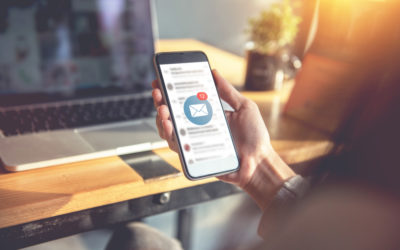
The subject line always creates the first impression of a newsletter. That impression should therefore be right: interesting, stimulating and informative. Tell the reader exactly what to expect and what advantage they get if they open the newsletter. Contact with the subscriber often fails right here, and the newsletter disappears into the inbox faster than you can count to 3. Short, crisp and fewer than 40 characters: that is what the perfect subject line looks like.
You probably also prefer to read newsletters that are personal. Newsletters that may even address you by your full name, not just with „Dear Sir or Madam!“ And that is exactly the point: meet the subscriber where they are. Know their circumstances, their age and their preferences. Send newsletters as specific to the target group as possible. Ideally, let users choose their preferences when they sign up. Then the chance is also higher that your newsletter will actually be read.
Let the reader recognize straight away what it is about, with a well-thought-out design and an appealing layout. The most important information and the CTA (call to action) should sit prominently at the start of the newsletter, without the reader having to scroll down. Further links should stand out as much as possible, for example with a button. Only then will the reader click and generate more traffic for your shop or website.
And finally, one of the most important tips: as little content and text as possible. Most companies unfortunately make the mistake of overloading their newsletters. A reader cannot process that much content and text at a glance. So: better more newsletters with crisp content!
When the right time is to send a newsletter depends heavily on the target group. While B2B customers may be easier to reach on weekdays between 9 a.m. and 6 p.m., evenings and weekends may work better for B2C customers. The best approach is to experiment with different sending times. Sometimes at the weekend, sometimes on a weekday morning. That is hard to generalize.
And that brings us to the last and most important point: most companies make the mistake of not analyzing their newsletters afterwards. Only by doing so can you see what works better for the target group. Only then can you uncover potential for improvement. You can, for example, send an A/B test with different subject lines but the same content, in order to find the best subject line for your target group.